The Problem
Airway mucus is conventionally treated as an obstacle to drug delivery — something to penetrate, disrupt, or circumvent. But mucus is also a protective barrier whose integrity is essential for host defense. Strategies that destroy mucus structure to improve drug transport may compromise the very system that keeps the airway safe from infection.
The deeper problem is that mucus doesn’t impede all molecules equally. Its selectivity arises from a spatially structured energy landscape — electrostatic charges from sialic acid and sulfate groups, hydrophobic domains from lipid-associated regions, steric constraints from the polymer mesh — that sorts molecules based on their physicochemical identity. A cationic drug experiences a fundamentally different mucus than an anionic one, even in the same patient.
Our Approach
Rather than treating mucus as a passive obstacle, we investigate strategies to transiently and reversibly reshape its energy landscape — modifying the pattern of wells, barriers, and channels that govern transport — without destroying its structural integrity or protective function.
Electrostatic landscape engineering. We study how interactions between exogenous molecules and the mucin charge network can transiently modify the local electrostatic environment, creating permissive states for transport of therapeutic payloads that would otherwise be excluded. The key insight is that you don’t need to break the barrier — you need to reshape its topology.
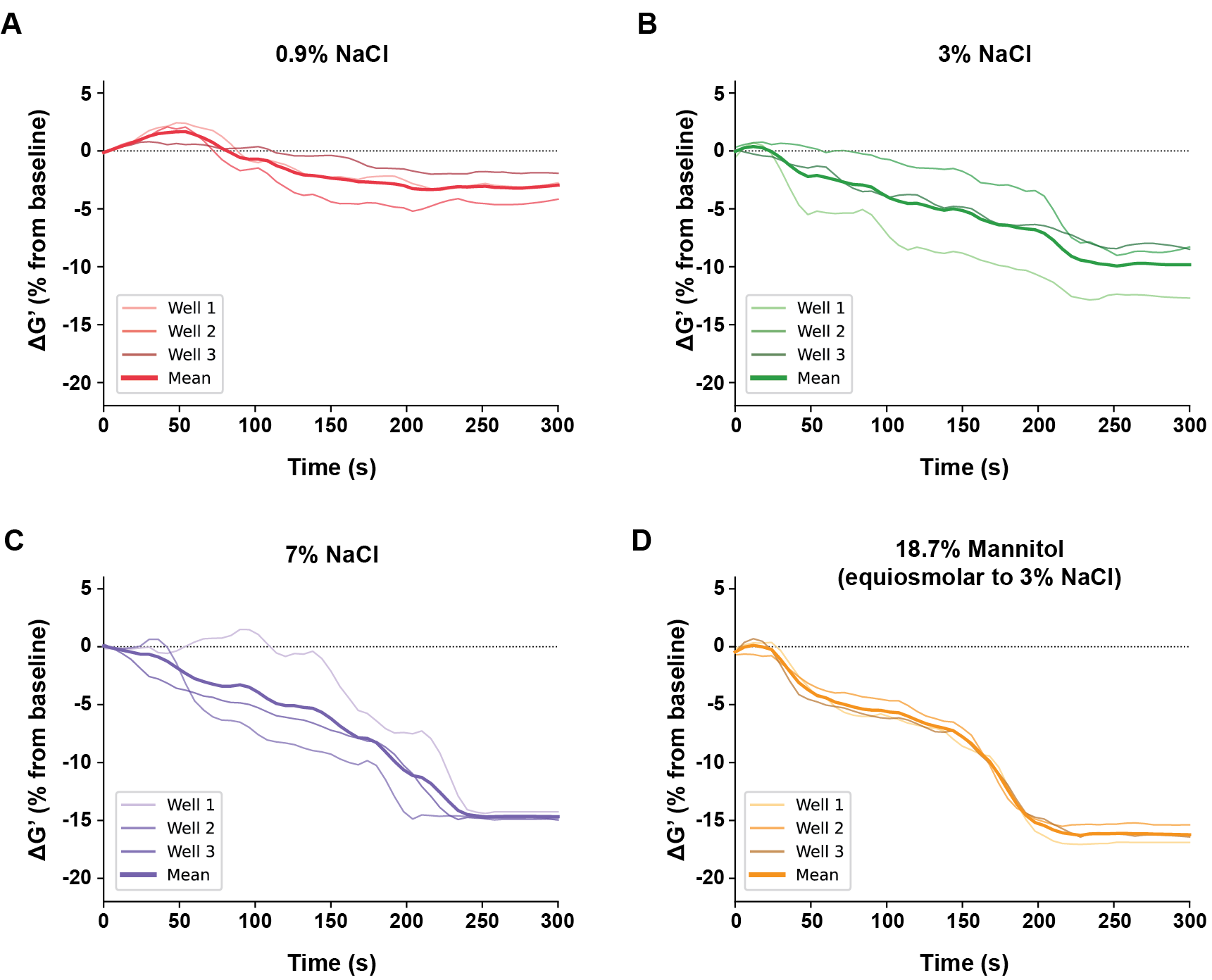
Mucus viscoelasticity modulation. We investigate how the mechanical properties of mucus — specifically its viscoelastic response at physiologically relevant frequencies — can be modulated to control residence time, clearance rate, and drug bioavailability. This includes strategies for nasal drug delivery where mucus transit time is a critical determinant of absorption.
Barrier-aware formulation design. All of our formulation work is designed with the barrier in mind. Understanding how mucus selectively filters drugs based on charge, hydrophobicity, and size informs every aspect of particle design — from surface chemistry to release kinetics to excipient selection.
Who Works on This
This project involves Nishant Shah (RAR-based mucus mechanics and osmotic modulation studies), Rahela Zaman (mucus transport and barrier remodeling), Grace Xia (mucus viscoelasticity in nasal delivery), and connects to the Barrier Cartography program for measurement support.