The questions that drive our work fall into three groups, distinguished by the nature of the medium. Some problems involve drugs encountering an existing structured matrix — mucus, biofilm, necrotic tissue — and the question is how the matrix sorts and traps the drug. Some problems are specific to the respiratory tract, where the airway’s depth-stratified architecture creates clearance physics that have to be designed against. And some problems involve creating a structured medium from scratch — drying a droplet into a particle, precipitating crystals — where the question is how to control the architecture that emerges.
The same physics governs all three. How we think →
Structured barriers
Barrier Cartography
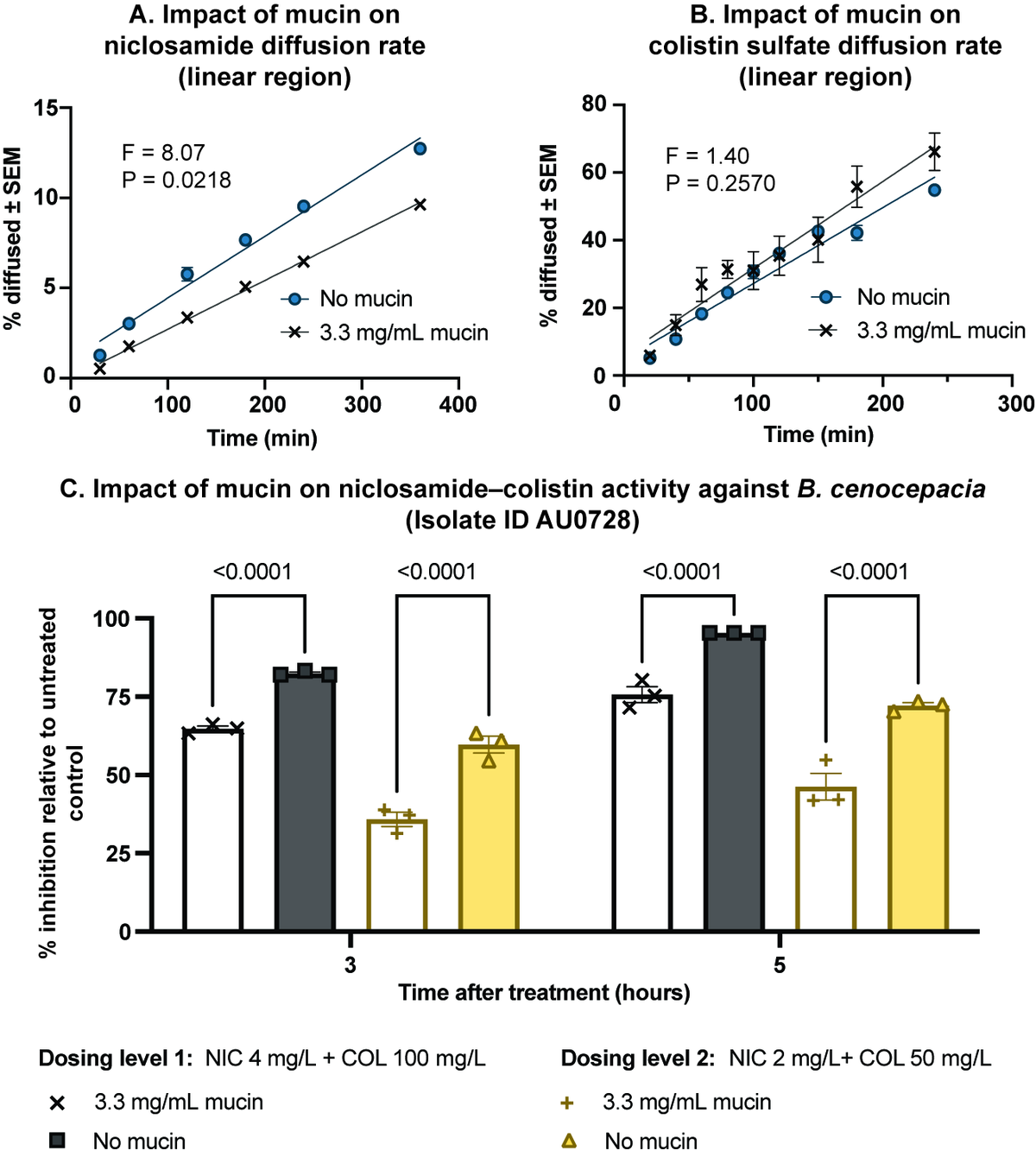
Where and when does a biological matrix capture a therapeutic?
We map spatially heterogeneous binding, transport, and failure to predict how far an intervention can effectively reach.
Airway transport
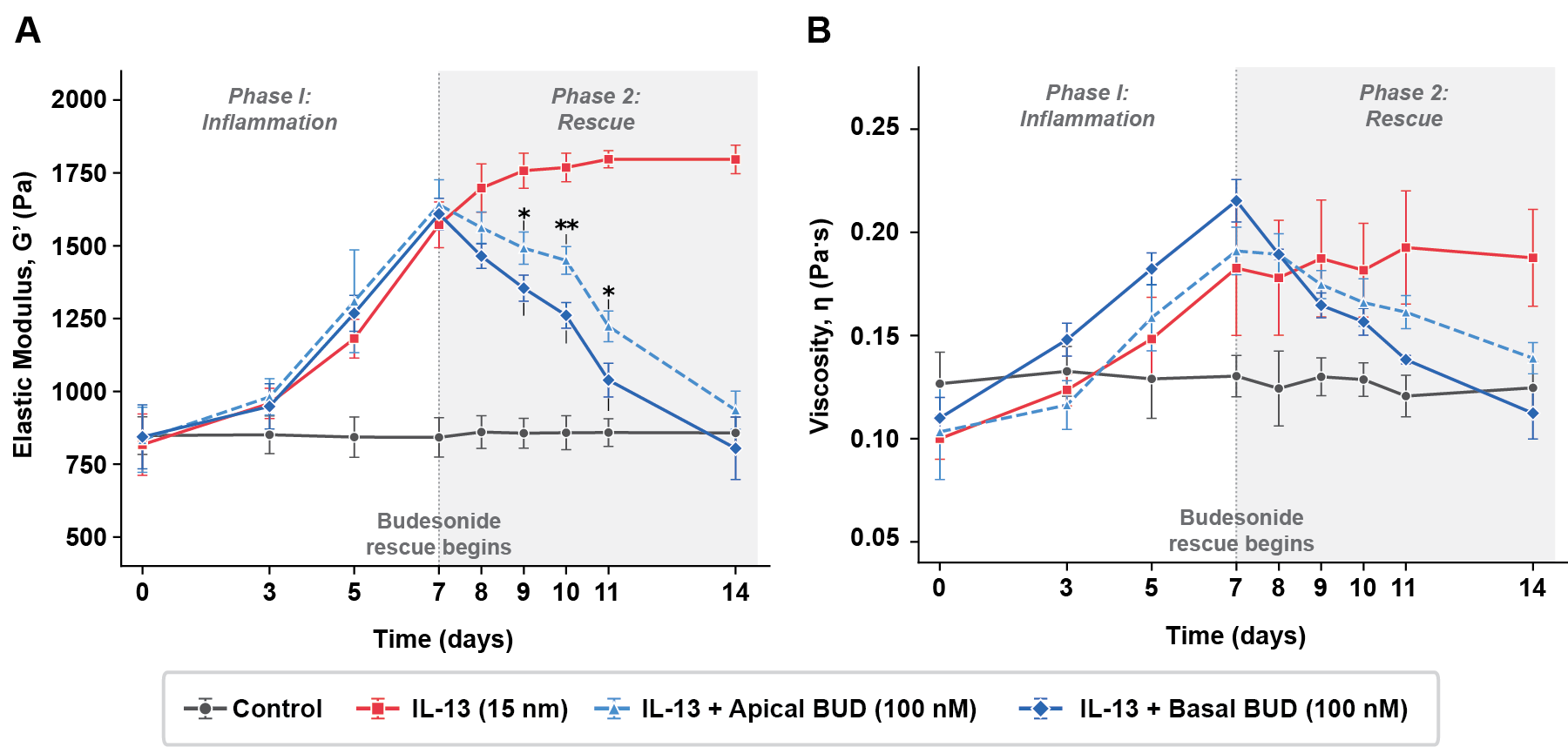
Mucus Modulation
Can we reshape a barrier without disabling its protective function?
We design interventions that alter mucus mechanics and molecular interactions while preserving the biology the barrier supports.
Disease context
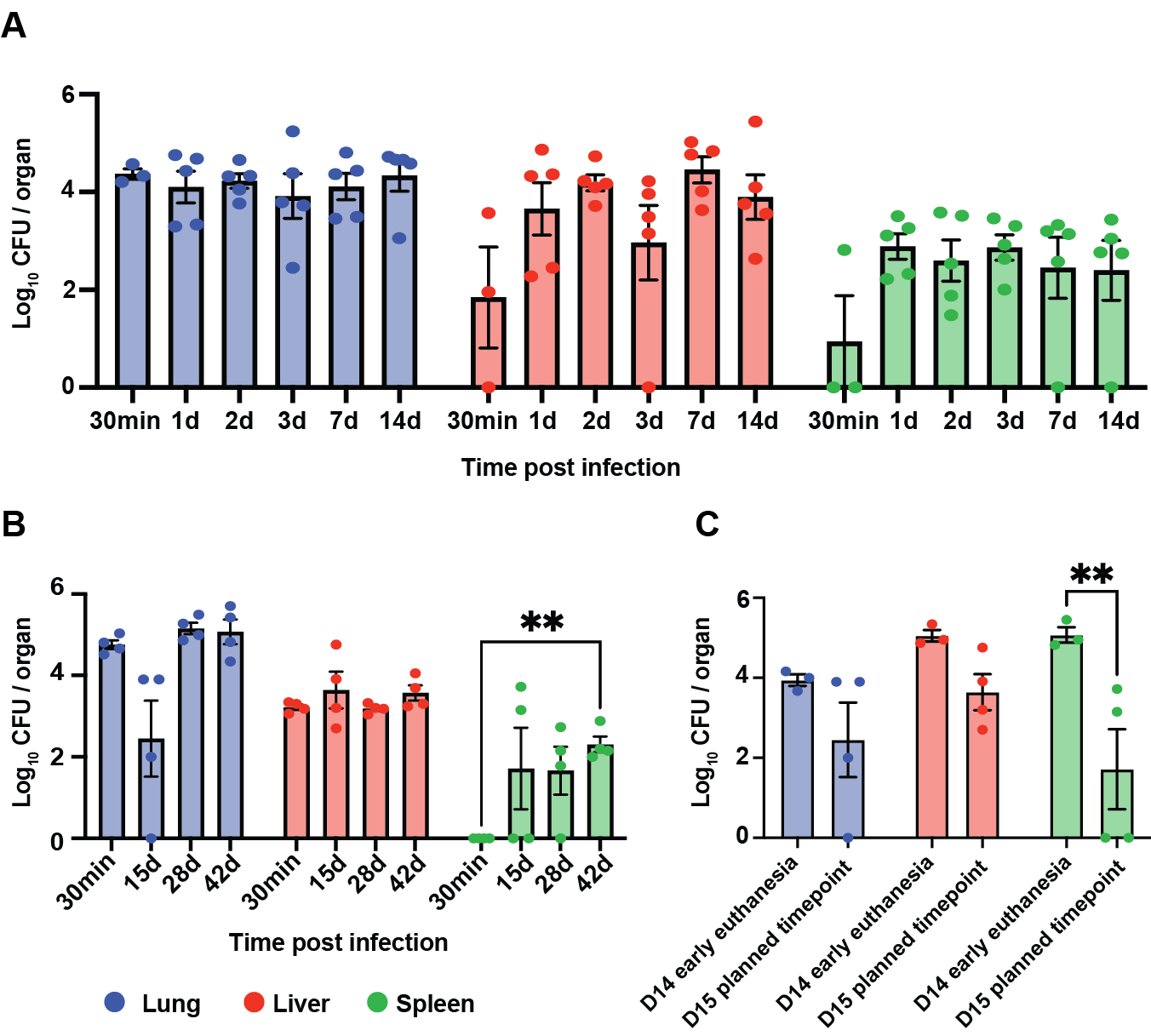
Infection Biology
Which biological contexts determine whether respiratory infection persists?
We build physiologically informed models that preserve strain, host, and time-dependent behavior relevant to therapeutic testing.
Combination therapies
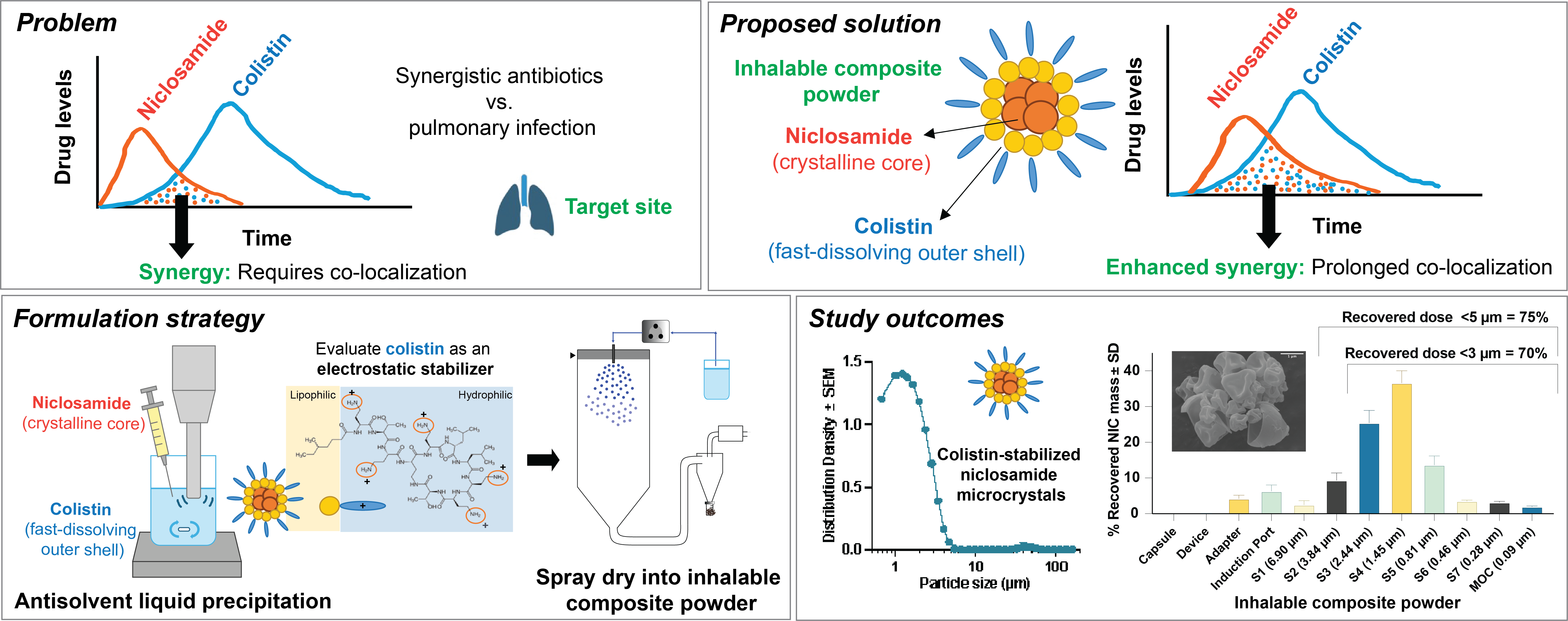
Antibiotic Synergy
Do combination partners still meet at an effective ratio after delivery?
We connect molecular transport, formulation, and microbial response to engineer synergy that survives changing environments.
Formulation and process
Particle Engineering
How does a transient process become durable particle architecture?
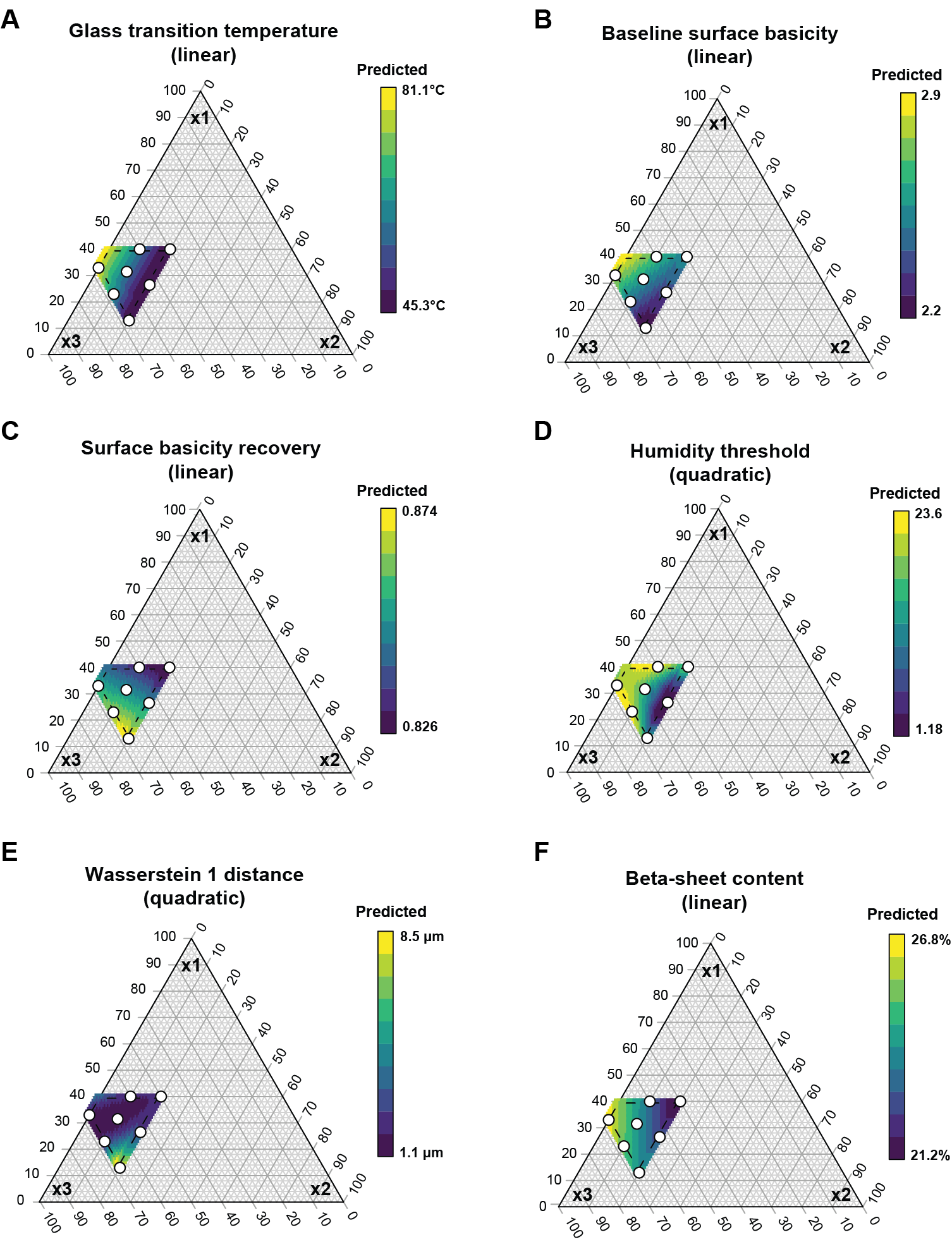
We control component redistribution, phase change, and interfacial organization to protect payloads and create functional powders.
Measurement science
Product Performance
Are we measuring the behavior that actually governs therapeutic performance?
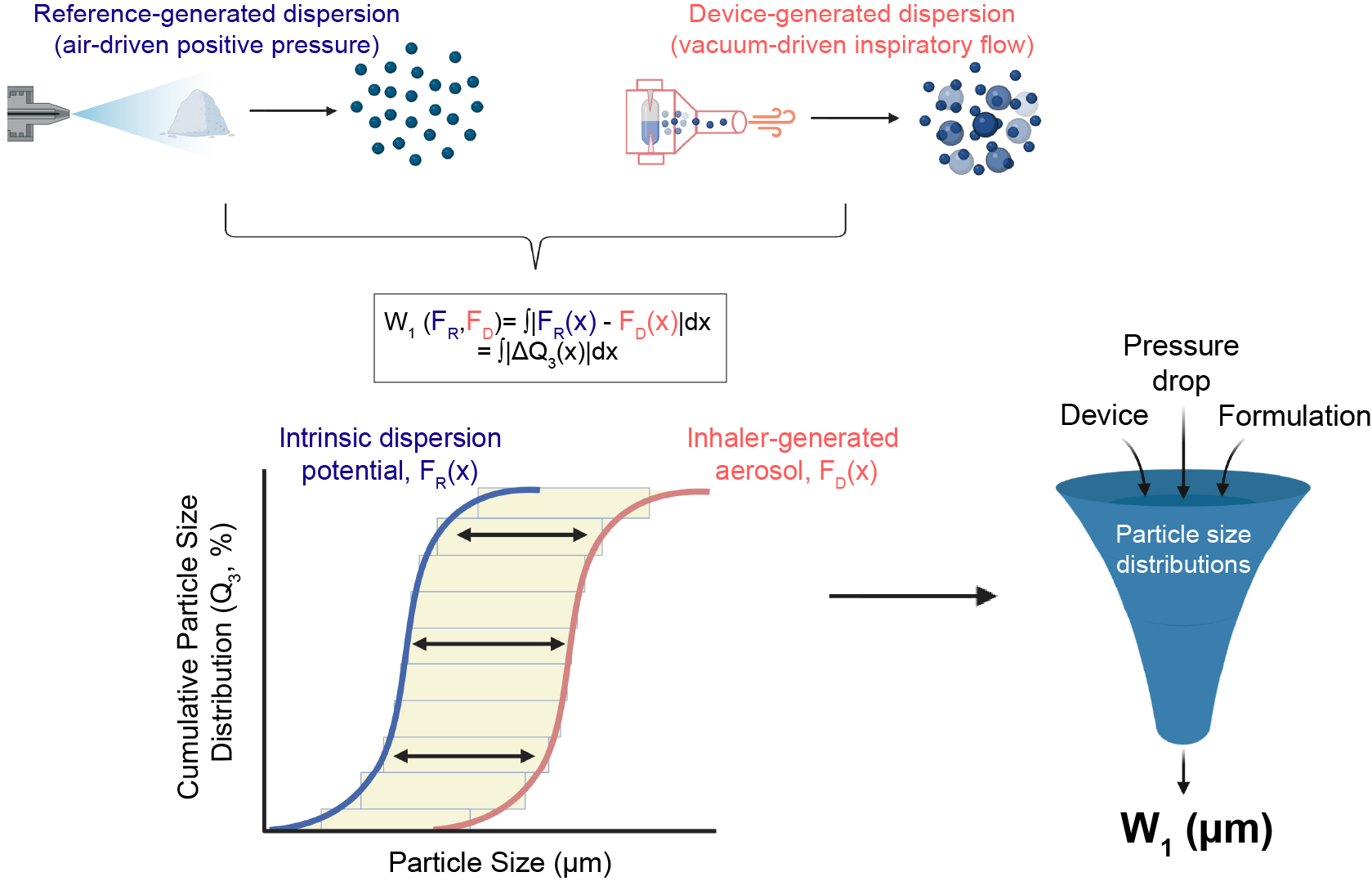
We develop instruments, physiologically relevant experiments, and distribution-aware metrics that expose product behavior directly.
The Common Framework
The six topics are connected by three transport logics: engaging an existing structured matrix, navigating the depth-stratified respiratory tract, and creating a structured material through a transient process.
Soft Matter Transport Logic
Mucus, biofilm matrix, necrotic tissue, and tumor stroma are not passive volumes that drugs diffuse through. They are sticky, capacity-limited matrices that bind drugs interfacially — and once binding capacity exceeds the dose, the drug is captured rather than free. Penetration depth, breakthrough, and time-to-failure are then set by adsorption physics, not classical diffusion.
Two specific commitments organize the lab’s work here. First, we investigate when transport enters an adsorption-limited regime — where finite binding capacity and encounter kinetics, rather than diffusion alone, determine therapeutic reach. Second, where the dominant interaction is electrostatic, the charge landscape is reprogrammable: introducing agents that locally modify the field can open transport windows or selectively redirect material through barriers that would otherwise exclude it. The barrier still functions; its selectivity is temporarily reshaped.
Projects Spatiotemporal Synergy · Mucus Barrier Modulation
Respiratory Transport Logic
The airway is not a single transport medium. The mucus gel and the periciliary brush are two different compartments with different clearance physics. For extracellular nasal therapeutics designed to act at the epithelial surface, productive exposure depends on reaching and remaining available at the ciliated apical interface — not simply remaining somewhere in the nasal cavity.
This depth asymmetry reframes the design objective. A formulation that increases bulk residence while losing functional availability at the target interface has not necessarily improved delivery. The lab develops technologies that control barrier mechanics, molecular interactions, and depth-resolved exposure — and measures whether a therapeutic remains available where its biology occurs.
Projects Mucus Barrier Modulation · Respiratory Infection Biology
Condensed Matter Arrangement Logic
The particle that arrives at a patient’s lung is not the formulation recipe. It is the frozen record of a transport competition that took microseconds to seconds — components redistributing at component-specific rates while the medium vitrifies, crystallizes, or gels around them. Bulk composition does not predict architecture without the process physics.
The lab treats this as a design problem rather than a process artifact. Component-specific Péclet numbers, evolving viscosity during drying, preferential interactions, and vitrification timing are the variables; surface composition, internal phase separation, and dissolution behavior are the outcomes. The same logic applies beyond spray drying — to antisolvent precipitation, freeze drying, solvent casting, gelation — wherever a transient process locks in a structured solid.
Projects Protecting Labile Payloads · Inhaled Product Performance · Spatiotemporal Synergy