The Problem
Chronic respiratory infections don’t establish randomly. They exploit specific physical and ecological conditions in the airway — regions of impaired clearance, altered mucus composition, oxygen gradients, and disrupted microbiome ecology. Yet we evaluate antibiotics in systems that ignore this spatial and ecological complexity, and we study infection establishment without accounting for the transport physics that governs which bacteria reach which niches.
This disconnect runs in both directions. When we test inhaled antibiotics, we use infection models with high variability and poor reproducibility because we haven’t controlled the physical delivery process. When we try to deliver beneficial organisms — probiotics — to the airway mucosa, we face the same barrier transport challenges as drug delivery, compounded by the need to keep living organisms viable through formulation and aerosolization.
Our Approach
We bring a transport physics and ecological perspective to respiratory infection biology — treating infection establishment, antibiotic evaluation, and live therapeutic delivery as related problems governed by the same underlying physics.
Infection as an ecological process. We study how the physical architecture of the airway — ventilation patterns, mucus obstruction, oxygen gradients — creates ecological niches that select for specific organisms. By mapping the spatial relationship between airway transport architecture and bacterial colonization, we aim to understand why infections concentrate where they do and what physical conditions tip the balance from clearance to establishment.
Rational inoculum design. Standard infection models introduce bacteria grown under laboratory conditions that bear little resemblance to the airway environment. We use lag-phase kinetics and growth conditioning to rationally engineer inocula whose physiological state is matched to the airway niche they must colonize. Combined with systematic optimization of the physical delivery process — formulation, delivery rate, deposition mapping — this approach reduces the variability that plagues preclinical antibiotic evaluation and produces models with greater translational relevance.
Encounter-assembled surface identity. A bacterium does not enter the airway as an unchanged, static target. Prior encounters with environmental proteins, mucins, and airway-surface components can assemble a dynamic adsorbed layer that changes how the bacterium is recognized and transported. We study how surface properties, exposure history, and adsorption kinetics shape downstream adhesion, immune recognition, clearance, and colonization — and which aspects of that history remain biologically consequential.
From infection models to live therapeutic delivery. The same physics that governs bacterial colonization of the airway governs the delivery of live therapeutics. Inhaled probiotics, bacteriophages, and engineered microbial consortia face identical challenges: surviving aerosolization, traversing the mucus barrier, and establishing at the mucosal surface. We apply lessons from our infection biology work to develop stabilization and delivery strategies for live organisms, closing the loop between understanding infection ecology and engineering therapeutic interventions that reshape it.
Selected Publications
- Warnken Z, Trementozzi A, Okezue M, Martins PP, Parekh J, Romero-Gonzalez M, Chen Z, Koleng JJ, Smyth HDC, Brunaugh AD. Formulation Design Dictates the Pulmonary Delivery and Antimicrobial Efficacy of Clofazimine–Amikacin Combinations against Mycobacterium abscessus. Molecular Pharmaceutics, 2026.
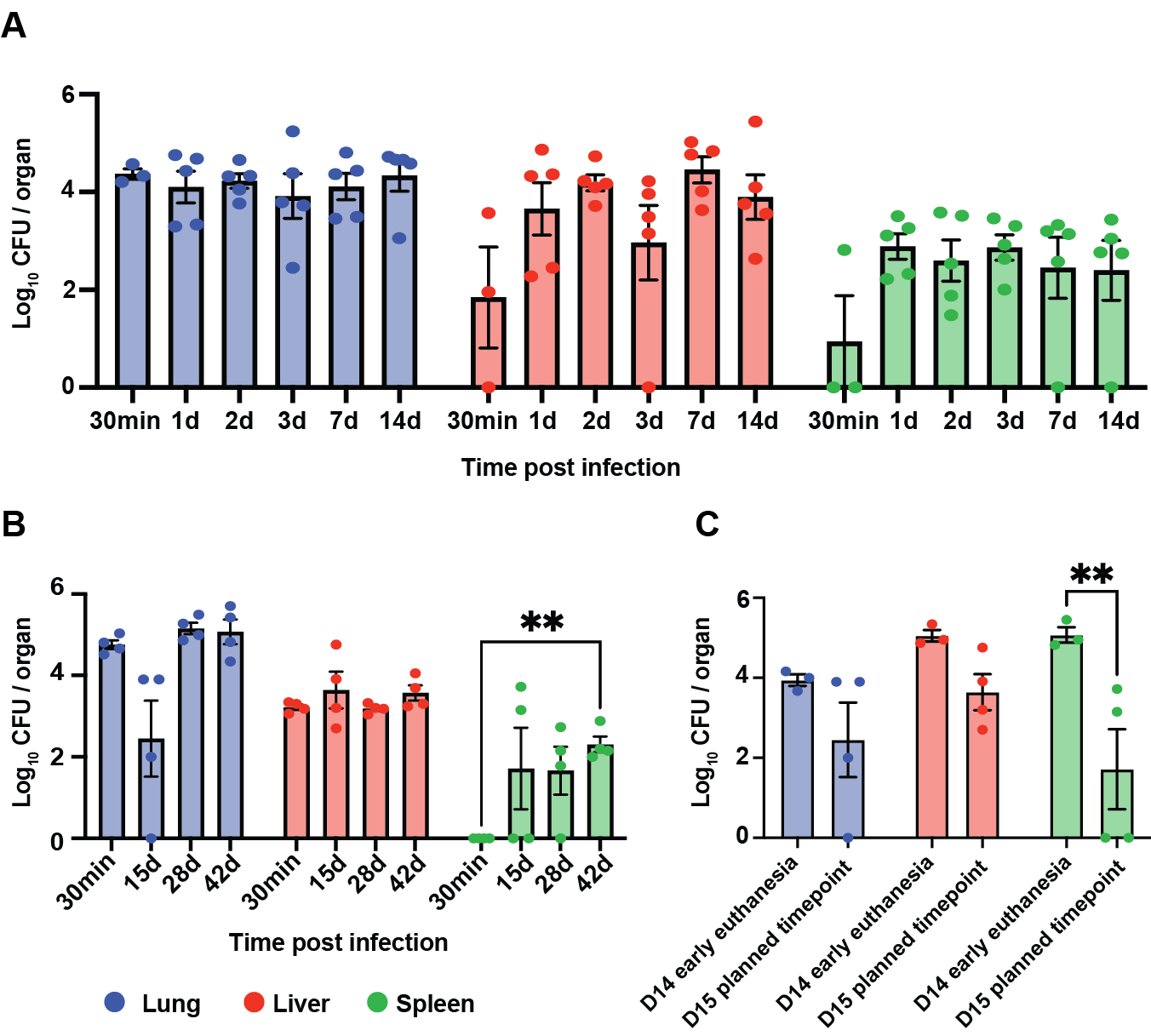
- Chen Z, Romero-Gonzalez M, Maser A, Leng R, Caverly LJ, Hershenson M, Brunaugh AD. Strain-Specific Persistence of Burkholderia cenocepacia in the C3HeB/FeJ Mouse Model of Pulmonary Infection. Journal of Medical Microbiology, 75(4): 002153, 2026.
- Brunaugh AD, Walz A, Warnken Z, Pearce C, Munoz Gutierrez J, Koleng JJ, Smyth HDC, Gonzalez-Juarrero M. Respirable Clofazimine Particles Produced by Air Jet Milling Technique Are Efficacious in Treatment of BALB/c Mice with Chronic Mycobacterium tuberculosis Infection. Antimicrobial Agents and Chemotherapy, 66(9): e00186-22, 2022.